自主移动与定位 Autonomous mobility
结合激光与视觉辅助定位,支持 SLAM 建图、重定位、动态避障和安全减速,适应跨区域、多工位移动任务。 Laser and visual localization support SLAM mapping, relocalization, dynamic obstacle avoidance and safe deceleration for routes across areas and workstations.
移动与操作一体化的柔性作业平台。集成自主移动底盘、六轴协作机械臂、2D/3D 视觉与任务调度,按现场物料和流程配置跨区域、跨工位的取放与转运任务。 A flexible platform combining mobility and manipulation. An autonomous base, six-axis collaborative arm, 2D/3D vision and task scheduling support picking and transfer across areas and workstations, configured for site materials and workflows.
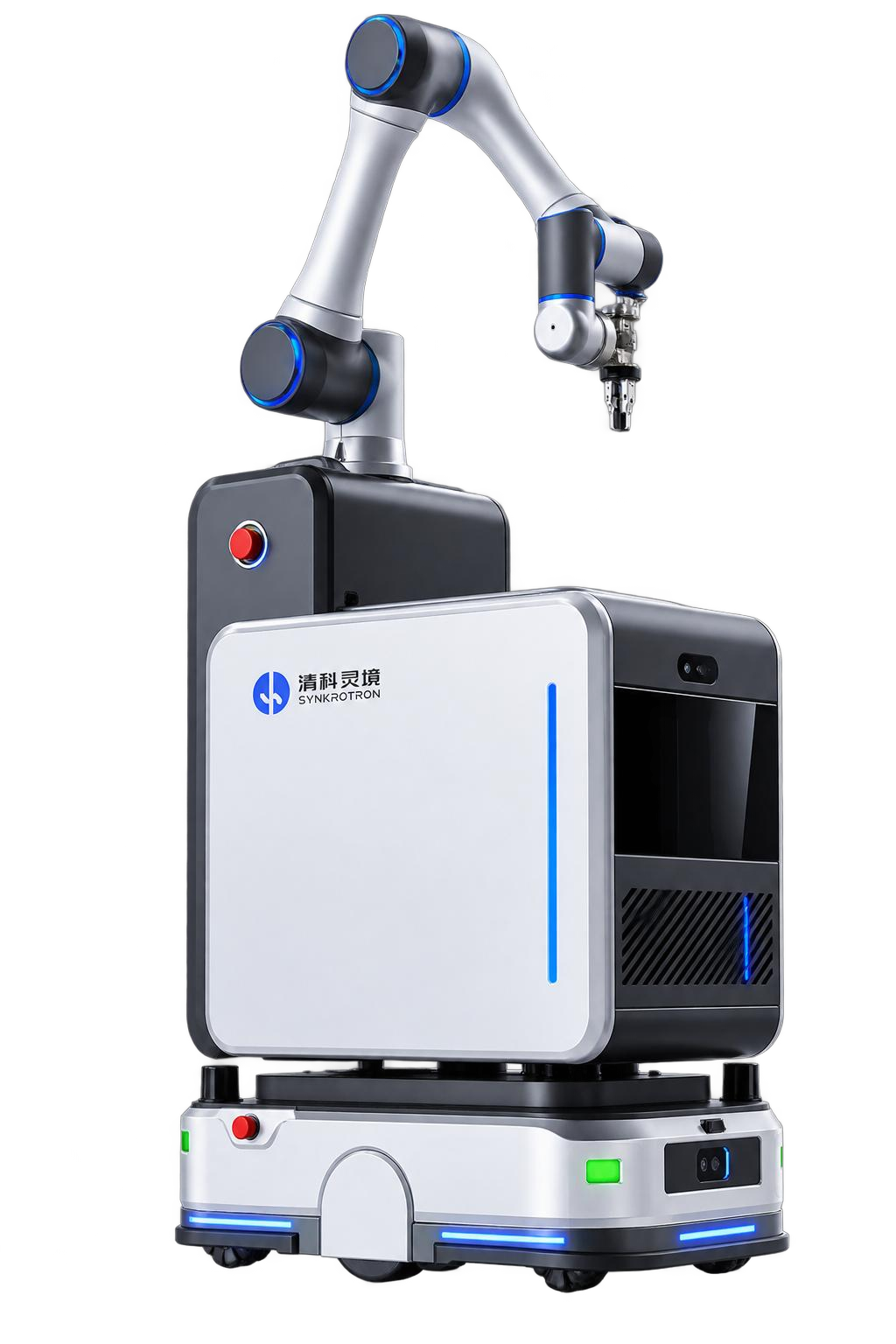
移动、视觉和机械臂在同一项任务中协同;具体动作及设备联动依据现场条件配置和验证。 Mobility, vision and the arm work together in one task. Actions and equipment integration are configured and validated for each site.
结合激光与视觉辅助定位,支持 SLAM 建图、重定位、动态避障和安全减速,适应跨区域、多工位移动任务。 Laser and visual localization support SLAM mapping, relocalization, dynamic obstacle avoidance and safe deceleration for routes across areas and workstations.
识别目标物料的位置、姿态及状态,为机械臂的抓取、上料、转运与放置提供引导。 Vision identifies an item's position, pose and state to guide picking, loading, transfer and placement.
六轴协作机械臂执行取放动作,可按物料选配夹爪、吸盘或定制治具。 The six-axis collaborative arm performs pick-and-place tasks, with grippers, suction tools or custom fixtures selected for the material.
从任务下发、跨工位移动,到视觉定位和机械臂取放,围绕现场设备及物料形成作业流程。 Task dispatch, travel between workstations, visual localization and arm handling form a workflow around the site's equipment and materials.
平台下发任务并管理路径、运行状态与执行日志。 The task platform handles dispatch, routes, operating status and execution logs.
机器人抵达工位后,视觉系统定位物料位置与姿态。 At the station, vision locates the item's position and pose.
机械臂配合适用的末端工具执行取放,机器人完成工位间转运。 The arm uses an appropriate end tool to pick and place items while the robot transfers them between stations.
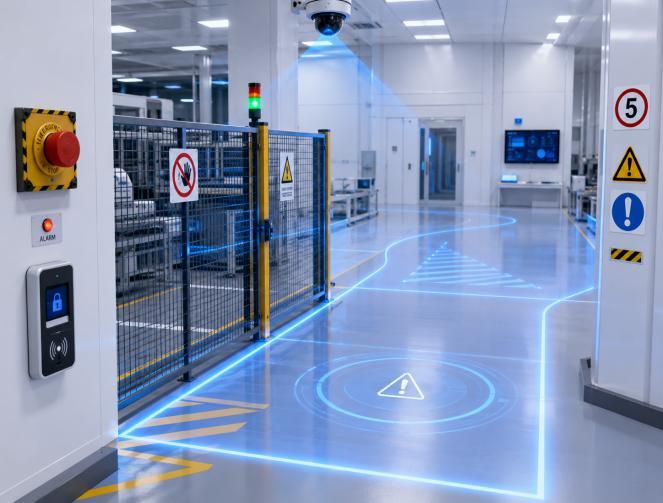
可根据项目需求对接 MES、WMS、LIMS、PLC,以及门禁、电梯和自动化设备;安全机制包括急停、避障、限速、区域管控与异常告警。接口、联动方式和安全配置以具体项目方案为准。 Project integrations can include MES, WMS, LIMS, PLC, access control, elevators and automated equipment. Safety features include emergency stop, obstacle avoidance, speed limits, area control and alerts. Interfaces and configurations depend on the project.
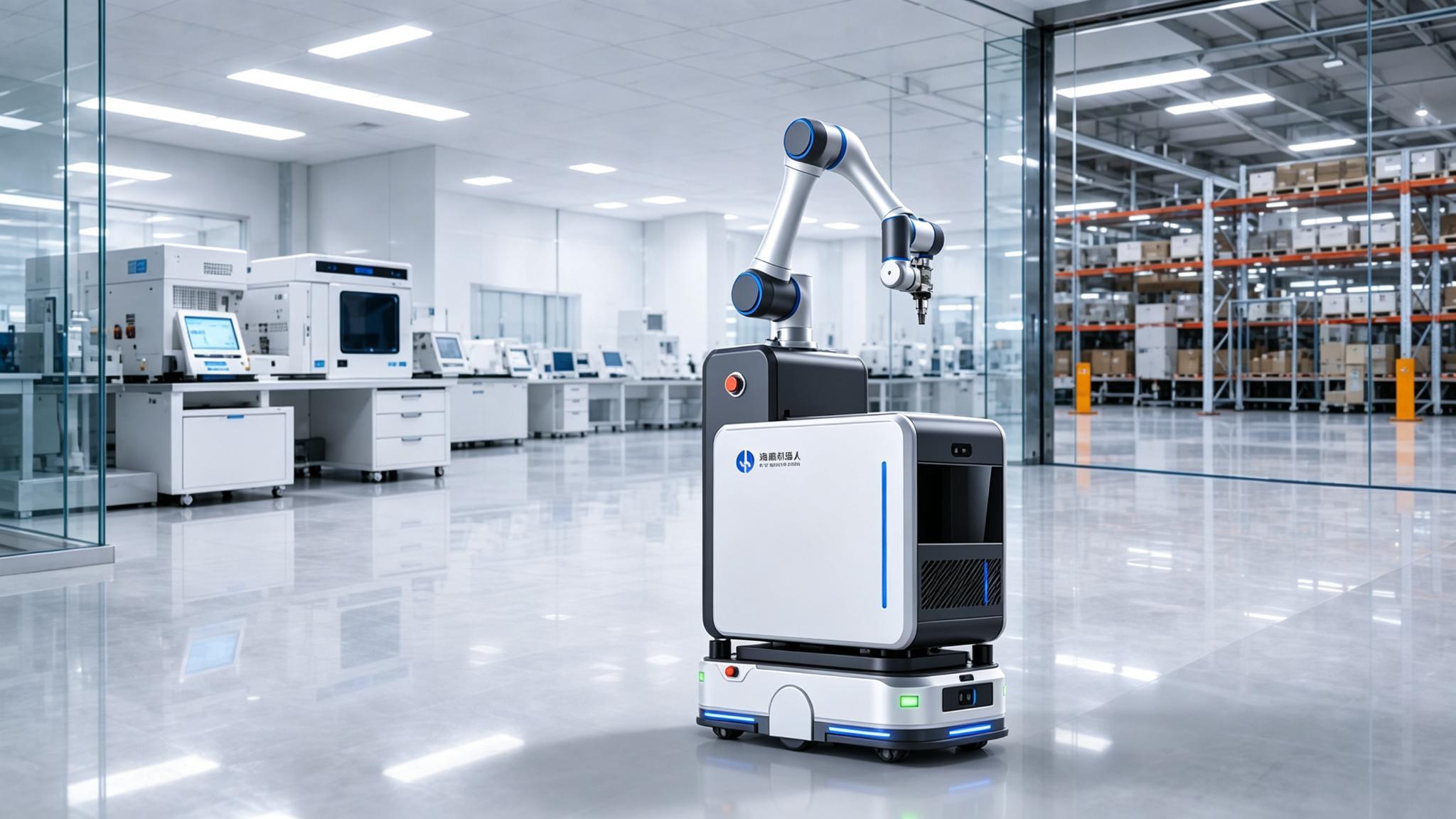
根据物料、工位和设备条件配置移动与操作任务,重点覆盖医疗检验和实验室,并可扩展至智能制造与仓储物流。 Mobility and manipulation tasks are configured for the materials, stations and equipment on site, with a focus on medical testing and laboratories and extensions to manufacturing and logistics.
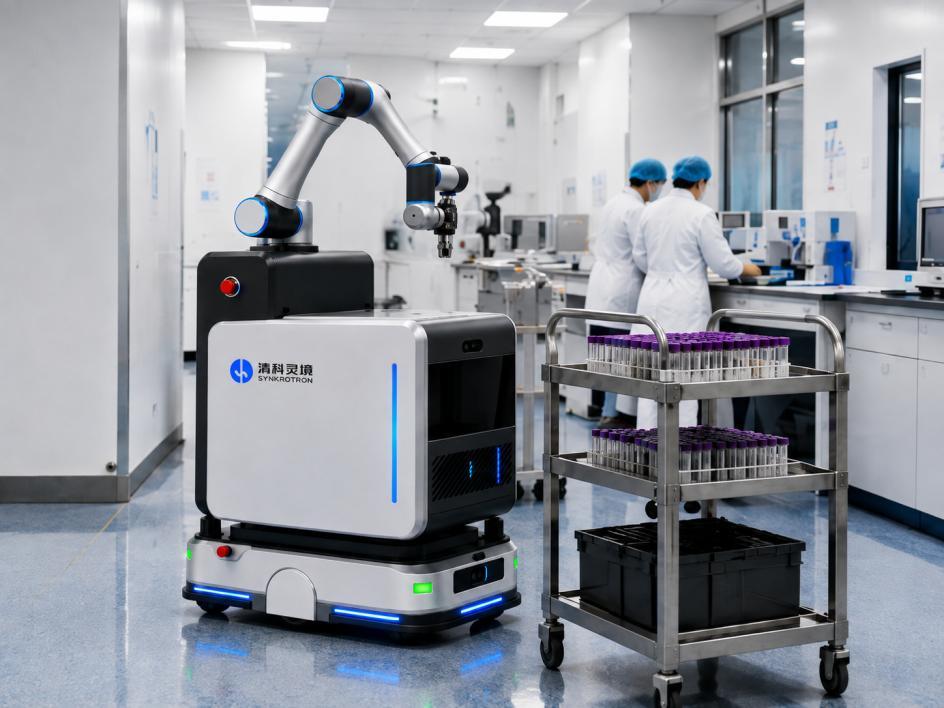
面向医院检验科、血液中心及医学检验实验室,围绕采血管、样本盒、试剂和耗材,设计采集、前处理、离心、分析与存储工位间的转运流程。扫码交接与业务系统对接需按现场流程实施。 For hospital laboratories, blood centers and medical testing labs, transfer workflows can be designed for tubes, sample boxes, reagents and consumables among collection, preparation, centrifugation, analysis and storage stations. Barcode handover and system integration depend on the site workflow.
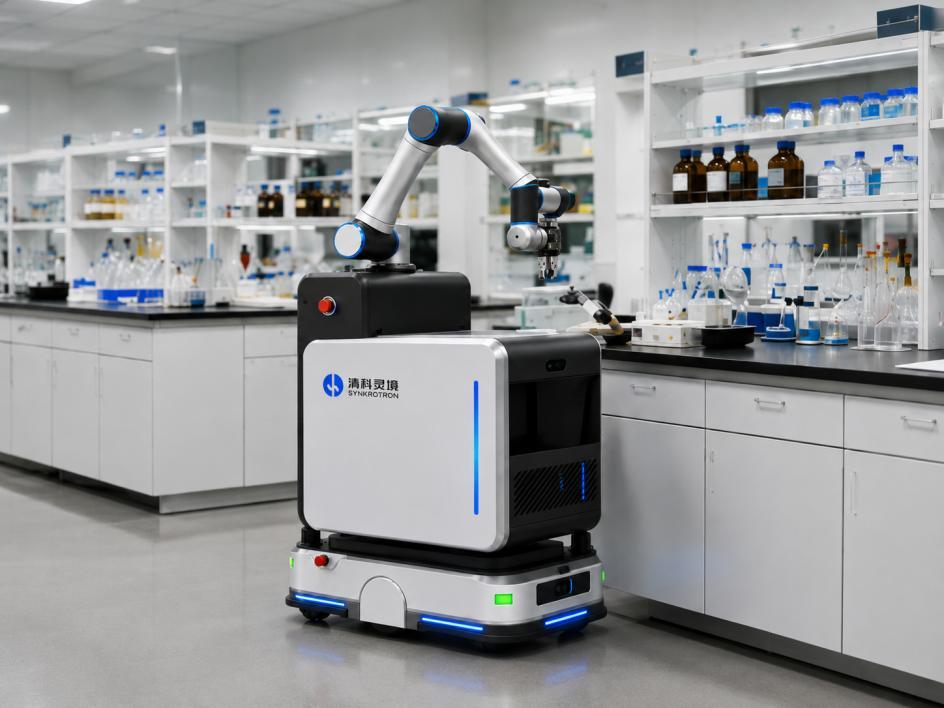
在样品柜、工作台与检测仪器之间完成样品、试剂及容器的取放和转运。末端工具可依据试管、样品瓶、培养皿等载体选择,设备联动按现场流程确认。 Picks, places and transfers samples, reagents and containers between storage, benches and instruments. End tools can be selected for tubes, bottles or dishes; equipment integration depends on site workflows.
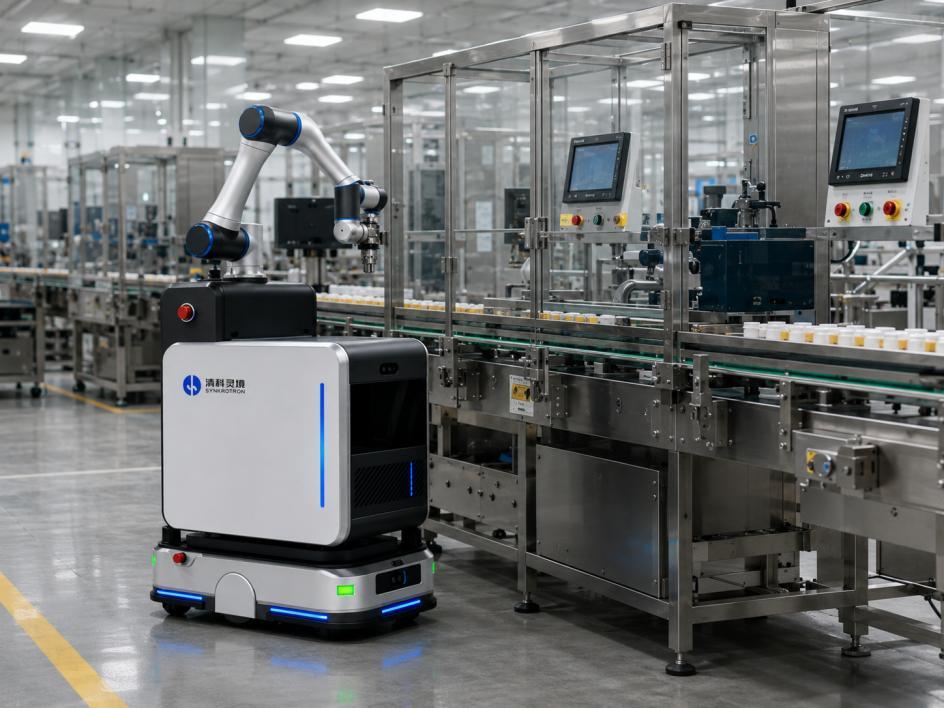
面向 CNC、注塑机与检测设备间的上下料及在制品转运;抓取方式、节拍和安全边界需结合产线调试。 Loading, unloading and work-in-progress transfer among CNC, molding and inspection equipment, with handling methods, cycle times and safety boundaries validated on site.
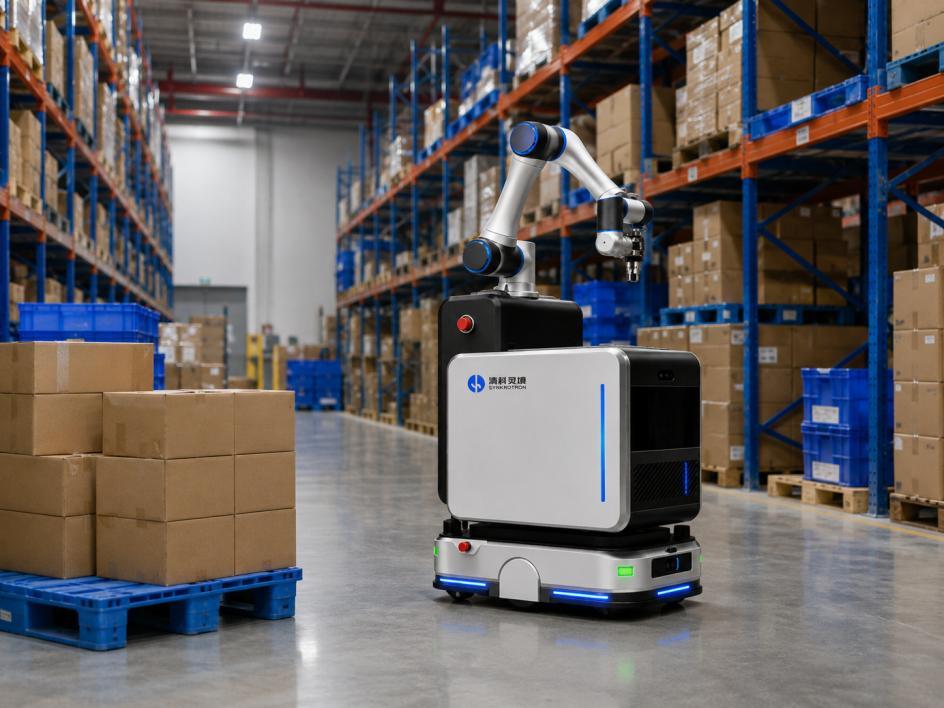
在货架、缓存区与工作站之间执行物料配送、空箱回收和搬运;拣选与交接能力取决于物料和现场系统条件。 Delivery, empty-box collection and transfer between shelves, buffer areas and workstations; picking and handover depend on materials and site systems.
在生物样本自动化处理方案中,复合机器人承担跨区域转运,机械臂在工位内执行试管抓取与取放。现阶段已完成导航定位算法、试管抓取和移液枪吸液/分液的初步技术验证。 In the biological sample handling proposal, the mobile manipulator transports items between areas while the arm picks and places tubes at a station. Initial validation has covered navigation, tube handling and pipetting.
以下画面是阶段性技术验证。样本接收、前处理、分装与自动入出库的完整示范线,仍需结合现场样本、设备接口和流程联调。 The footage below shows technical validation. A complete demonstration line for receiving, preparation, dispensing and automated storage still requires testing with site samples, device interfaces and workflows.
以上为典型配置参数,具体配置将根据实际作业任务和现场条件确定。 The specifications above represent a typical configuration. Final specifications are determined by the task and site conditions.